What Causes Efflorescence and How Basement Waterproofing Solves It

Efflorescence has a way of alarming homeowners because it looks like something is growing on the wall. White, chalky streaks on concrete or masonry rarely inspire confidence, especially in a basement where moisture problems already feel close at hand. I have walked through many lower levels where the first concern was mold, structural damage, or a hidden plumbing leak, only to find that the immediate white residue was efflorescence. That does not mean it is harmless, and it certainly does not mean it should be ignored. It means the deposit itself is a clue, not the root problem.
The real story begins with water.
When moisture moves through concrete, block, brick, or mortar, it can dissolve naturally occurring salts inside those materials. As that moisture reaches the surface and evaporates, the salts remain behind. What you see is a powdery, sometimes fuzzy-looking deposit that can range from a thin film to a crusty buildup. Efflorescence does not appear because a wall is old or because a basement is unfinished. It appears because water has found a path.
That is why any serious discussion of efflorescence has to include Basement Waterproofing. If the moisture source remains active, the white staining will usually return, no matter how often it is scrubbed away.
What efflorescence actually is
Concrete and masonry are not inert in the way many people assume. They contain mineral compounds and salts that react to moisture movement over time. In a basement, where walls are often in direct contact with damp soil, water pressure and capillary action can draw moisture inward. The water dissolves salts from the wall itself or from surrounding materials. Then, once the moisture reaches the interior face of the wall and evaporates, those salts crystallize on the surface.
The result is efflorescence.
Most of the time it looks white, but texture varies. Sometimes it is a soft dust you can wipe off with your hand. Other times it feels gritty or forms a stubborn crust. I have seen block walls with clean vertical white lines that traced the path of water through the cores. I have also seen broad cloudy patches behind stored boxes, where airflow was poor and moisture lingered longer before evaporating.
A useful distinction here is that efflorescence is generally on the surface. A related condition called subflorescence happens when salts crystallize beneath the surface of masonry. That can create internal pressure and eventually contribute to spalling, flaking, or face loss in brick and some cement-based materials. In a basement, this matters because cosmetic staining can be the first stage of a larger moisture cycle that slowly degrades finishes and masonry.
Why basements are especially vulnerable
Basements sit below grade, which means their walls and floors are surrounded by soil for most or all of their height. Soil holds moisture. After rain or snowmelt, the amount of water around a foundation can increase dramatically. If the grading outside slopes toward the house, if downspouts discharge too close to the wall, or if footing drains are clogged or absent, the foundation ends up under even more moisture stress.
Concrete is strong, but it is also porous. Cinder block walls are even more prone to water migration because of joints, hollow cores, and the sheer number of pathways available. Mortar joints can absorb moisture. Small shrinkage cracks can transmit it. Cold joints between slab and wall can leak. None of this requires a dramatic flood event. In many homes, moisture movement is slow, consistent, and easy to miss until visual evidence appears.
Seasonal conditions make the problem more visible. During humid summer weather, a cool basement can attract condensation on walls and floors. During wet spring months, hydrostatic pressure in the surrounding soil often increases. In winter, freeze-thaw cycles outside can widen cracks and open new routes for moisture entry. Efflorescence tends to show up after these changes, but the underlying issue often develops over years.
The common causes behind efflorescence
It helps to think of efflorescence as needing three ingredients: water, soluble salts, and a path to the surface. Remove the water, and the process stops.
Here are the most common causes I see in basement settings:
- Poor exterior drainage, including negative grading and short downspout discharge
- Hydrostatic pressure pushing groundwater through foundation walls or floor joints
- Porous or cracked masonry that allows water migration
- Interior humidity and condensation adding surface moisture to cool materials
- Incomplete or failed Basement Waterproofing systems, including aging coatings or clogged drains
Not every basement has all five at once. In fact, one of the most common missteps is treating every case as if it has a single cause. A house may have acceptable gutters but poor grading on one side. Another may have no visible wall cracks yet still draw moisture through the slab because of groundwater pressure. A third may have had a waterproofing coating applied years ago, but the coating is now trapping moisture behind paint, leading to blistering and salt deposits.
The location of the efflorescence can offer clues. White residue concentrated near the base of a wall often points toward water entering where the wall meets the floor, or traveling upward from the slab edge. Efflorescence appearing in isolated vertical bands on a block wall can suggest water movement through hollow cores or mortar joints. Widespread haze over a concrete floor usually indicates vapor transmission or moisture rising from below the slab.
What efflorescence is not
Homeowners often confuse efflorescence with mold. That is understandable because both can show up in damp basements, and both can create patches or discoloration. The difference usually becomes clear on closer inspection. Efflorescence is mineral based, often bright white, and tends to feel dry and powdery once the surface moisture has evaporated. Mold is biological, can be many colors, and often grows on organic materials such as wood, paper-faced drywall, fabric, or dust-coated surfaces.
That said, both can appear in the same basement. A wall showing efflorescence may be feeding enough moisture into the air to support mold growth elsewhere. So while the white deposit itself may not be mold, it should still prompt a broader look at moisture management.
It is also not a structural diagnosis by itself. Efflorescence tells you that water has been present, but it does not automatically mean the foundation is failing. I have seen severe-looking white buildup on walls that were structurally sound, and almost invisible salt deposits on walls with meaningful cracking and bowing. You need context: the pattern, the moisture level, the age of the house, any movement in the wall, and the drainage conditions outside.
Why simply cleaning it rarely works
A lot of people try to solve efflorescence with a wire brush, vinegar solution, masonry cleaner, or fresh coat of paint. Cleaning has its place. It can improve appearance and help you monitor whether active moisture is still present. But cleaning alone is rarely a fix.
If the wall continues to take on water, the salts will return. Sometimes they come back within weeks. Sometimes it takes a season. Painting over active efflorescence is especially unreliable. The moisture pressure behind the coating often causes blistering, peeling, or bubbling, and the wall looks worse than it did before.
One basement owner I met had repainted the same wall three times in four years. Each time, the finish looked decent for a few months, then developed bubbles and white streaks near the floor. Outside, one downspout ended less than two feet from the foundation, and the flower bed along that wall had settled into a shallow trough that collected runoff. The wall was telling the truth. The paint was just covering it temporarily.
How Basement Waterproofing addresses the real problem
Effective Basement Waterproofing is about controlling water before it can move through the foundation system, or intercepting it in a managed way if it does. The best approach depends on the age of the house, the foundation type, the severity of moisture, and access to the exterior. There is no single universal fix, but there is a clear principle: stop the water pathway, or relieve the pressure causing the movement.
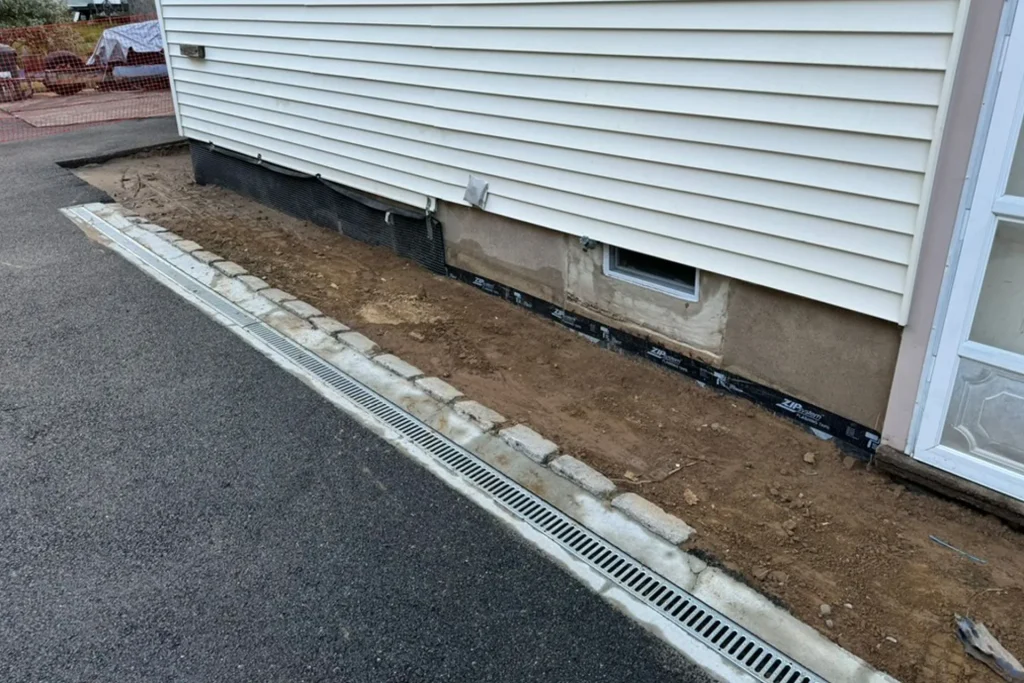
Exterior waterproofing is the most direct way to address water entry through below-grade walls. This can involve excavation to expose the foundation, repairing cracks, applying a waterproof membrane, installing or replacing drainage board, and ensuring footing drains carry water away properly. Done well, it tackles the issue at the source. It is also more disruptive and expensive, which is why it is usually reserved for persistent seepage, major renovations, or situations where exterior excavation makes sense.
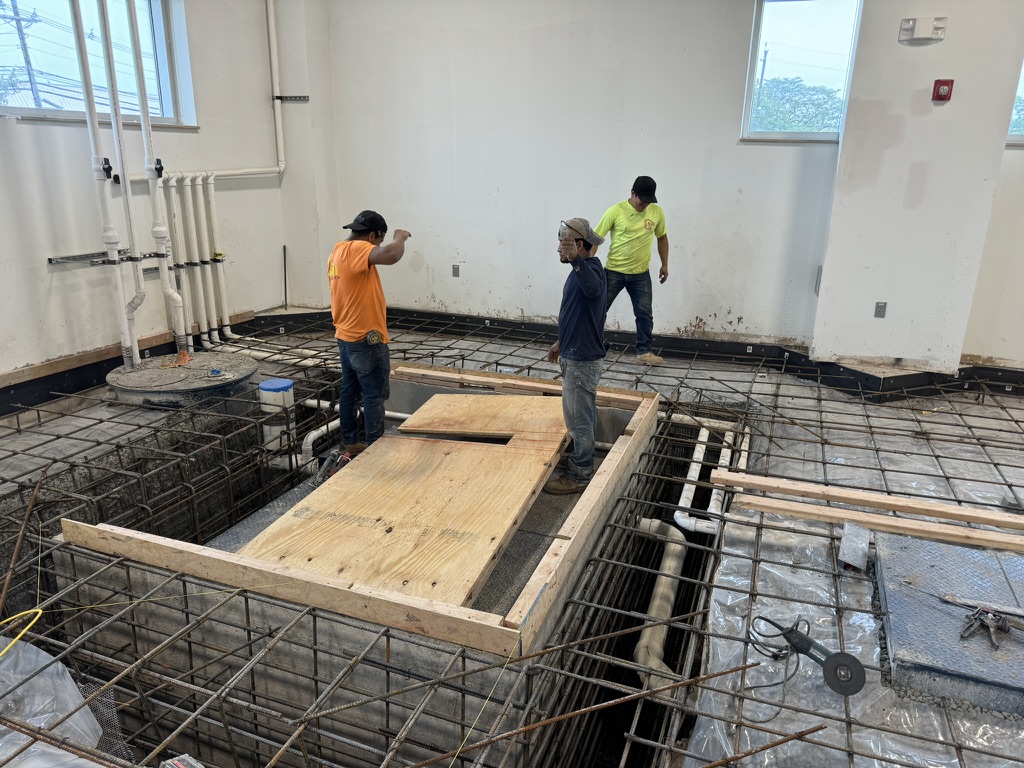
Interior waterproofing systems are often the practical choice when groundwater pressure is driving seepage or when excavation is not feasible. These systems can include a perimeter drain installed along the basement floor edge, a sump basin with pump discharge, vapor barriers on walls, and controlled drainage pathways that collect and redirect water before it spreads across the floor or saturates finishes. Some people misunderstand interior systems because they do not always stop water from touching the exterior side of the wall. Their strength lies in pressure relief and water management. In many basements, that is the difference between chronic dampness and a dry, usable space.
Crack injection has its place too, especially for poured concrete foundations with isolated seepage through non-structural cracks. Polyurethane injection can seal active leaks by expanding within the crack path, while epoxy is often used when structural bonding is also needed. On block foundations, though, cracks are only part of the picture. Water may also move through porous block faces or mortar joints, which is why broader drainage strategy matters.
The role of exterior water management
Some efflorescence problems can be reduced dramatically without touching the inside wall at first. I have seen basements improve after seemingly modest exterior corrections because the house was simply collecting too much roof and surface water in the wrong places.
If I were evaluating a basement with mild to moderate efflorescence, I would pay close attention to these exterior factors:
- Whether the ground slopes away from the foundation for the first several feet
- Where gutters and downspouts send roof runoff
- Whether paved areas pitch water toward the house
- The condition of window wells, if any
- Signs of standing water after rain
These are not cosmetic details. A standard roof can shed a surprising volume of water in a storm. If that runoff is dropped next to the foundation, the soil becomes saturated quickly. Saturated soil means more pressure against the basement wall and more opportunity for water migration. Extending downspouts, correcting settled grading, and managing hardscape runoff are often the lowest-cost improvements with the highest return.
Still, those measures are not always enough on their own. In areas with high water tables, dense clay soil, or older homes with limited footing drainage, exterior surface corrections may reduce the moisture load without eliminating it. That is where a more complete Basement Waterproofing strategy becomes necessary.
How professionals distinguish between mild and serious cases
Not all efflorescence demands the same response. Some cases are mostly seasonal and cosmetic. Others are an early warning of sustained water intrusion.
A lighter case may involve a thin white film on unfinished concrete, no musty odor, and no evidence of liquid water on the floor. Moisture levels may spike after heavy rain but settle quickly. The recommended response might start with exterior drainage improvements, dehumidification, and observation.
A more serious case often includes one or more of the following: repeated salt buildup after cleaning, damp wall surfaces, peeling coatings, rusty metal fasteners, wet floor edges, stored items developing mildew, or visible seepage during storms. If there is also spalling concrete, crumbling mortar, or bowed walls, the issue moves beyond appearance and into material deterioration or structural evaluation.
Judgment matters here. Over-treating a mild case can waste money. Under-treating a severe one can lead to ruined finishes, persistent air quality problems, and rising repair costs. Basement systems tend to reward early intervention. Once a finished wall assembly traps moisture behind insulation and drywall, the repair scope https://arthurvigd952.oakridgedigest.com/posts/basement-waterproofing-options-for-homes-with-high-water-tables usually expands.
Why dehumidifiers help, but do not solve the source
A dehumidifier can be valuable in a basement with elevated relative humidity. It can reduce musty odors, limit condensation, protect stored belongings, and make the space more comfortable. In some homes, it is an essential part of moisture control.
But a dehumidifier does not stop liquid water or vapor transmission through the foundation. It addresses the symptom inside the room, not the pressure outside the wall or below the slab. If efflorescence is actively forming because groundwater is driving moisture through masonry, the machine may slow visible dampness on surfaces while the salts continue to accumulate over time.
Think of it as support, not a cure. Good Basement Waterproofing often includes humidity control, but it should not rely on humidity control alone.
Cleaning efflorescence the right way
Once the moisture source is being handled, cleaning makes sense. Dry brushing is often enough for light deposits. More stubborn cases may need a masonry cleaner formulated for mineral residue. Mild acidic solutions are sometimes used, but they need caution. The wrong cleaner can etch surfaces, damage mortar, or create fumes in an enclosed basement. I usually advise testing a small area first and avoiding any treatment until the wall has been assessed for active moisture movement.
It is also worth remembering that freshly cleaned walls can reveal patterns that were obscured before. Those patterns are useful. If the residue reappears in the same spots after rainfall, that is diagnostic information. It tells you where the water path remains active.
Basement finishing changes the stakes
An unfinished basement can hide a moisture issue in plain sight for years. The wall looks ugly, but the damage remains mostly visible and accessible. Once framing, insulation, flooring, and drywall go in, the same moisture becomes more expensive and more disruptive.
Efflorescence behind finished materials may not announce itself until trim swells, paint blisters, flooring edges cup, or the room develops a persistent odor. By then, the source water has often affected several materials at once. I have opened finished basement walls where the concrete behind the studs was coated in salt, the bottom plate was damp, and the fiberglass insulation was compressed from repeated moisture exposure. None of that was obvious from the room side until the damage spread.
That is why waterproofing should come before finishing, not after. If you see efflorescence on unfinished walls, treat it as a chance to solve the problem while access is still easy.
When efflorescence points to a bigger foundation issue
Most efflorescence relates to moisture, not structural failure. Still, some warning signs should push the conversation beyond waterproofing alone. Horizontal cracking in block walls, inward bowing, stair-step cracking in masonry, slab heaving, or significant water entry through widening cracks can indicate pressure or movement that needs structural assessment. Waterproofing and structural repair often work together in these situations. One handles water, the other restores or reinforces the building element under stress.
Ignoring either side of that equation is a mistake. A reinforced wall that stays wet will continue to deteriorate. A waterproofed wall that is actively moving still needs stabilization.
What homeowners should do first
Start with observation, not guesswork. Look at where the efflorescence appears, whether it changes after storms, and whether other moisture signs are present. Check exterior drainage. Notice any odors, peeling coatings, or dampness at the wall-floor joint. If the basement is finished, pay attention to subtle changes such as swollen baseboards or recurring mildew on stored items.
Then decide whether the issue appears manageable through exterior corrections and monitoring, or whether it warrants a professional Basement Waterproofing evaluation. The earlier that decision is made, the more options you usually have.
Efflorescence is not the disease. It is the symptom that gives the disease away. A basement wall does not grow white crystals for no reason. It does it because water is moving through the building materials, carrying salts to the surface one evaporation cycle at a time. Clean the residue if you want the wall to look better. Waterproof the basement if you want the problem to stop repeating.
ARD Waterproofing
98 Smull Ave, West Caldwell, NJ 07006, United States
+1 917-691-8411
FAQ About Basement Waterproofing
Can you 100% Waterproof a Basement in West Caldwell?
A properly designed system can substantially reduce basement water intrusion, but no method can promise protection against every flood, equipment failure, or future change in site conditions. The first step is identifying whether moisture comes from surface runoff, groundwater, plumbing, or condensation. Solutions may include grading and gutter improvements, drainage, foundation repairs, and a sump system. Review the specific coverage and exclusions of any written warranty.
How much does it cost to professionally waterproof a basement in NJ?
There is no single price that fits every basement. Cost depends on the cause of the leak, the area needing work, access, excavation requirements, drainage design, sump equipment, and restoration of disturbed finishes or landscaping. Request an on-site assessment and an itemized written estimate that explains the scope, exclusions, and maintenance requirements before comparing proposals.
How long does foundation waterproofing last in West Caldwell, NJ?
Service life varies with the waterproofing materials, installation quality, soil and water conditions, and maintenance. Drainage components and pumps may require servicing or replacement even when other parts of the system remain functional. Keep gutters, drainage outlets, and sump equipment maintained, and have recurring leaks or changes in foundation condition assessed. Ask for product-specific expectations and written warranty terms rather than relying on one lifespan for the entire system.